

The Gilded Hour Edit · Design Notes
Sculpted bracelets, expressive cases and tiny decorative details turn the best vintage women’s watches into far more than accessories that tell the time.
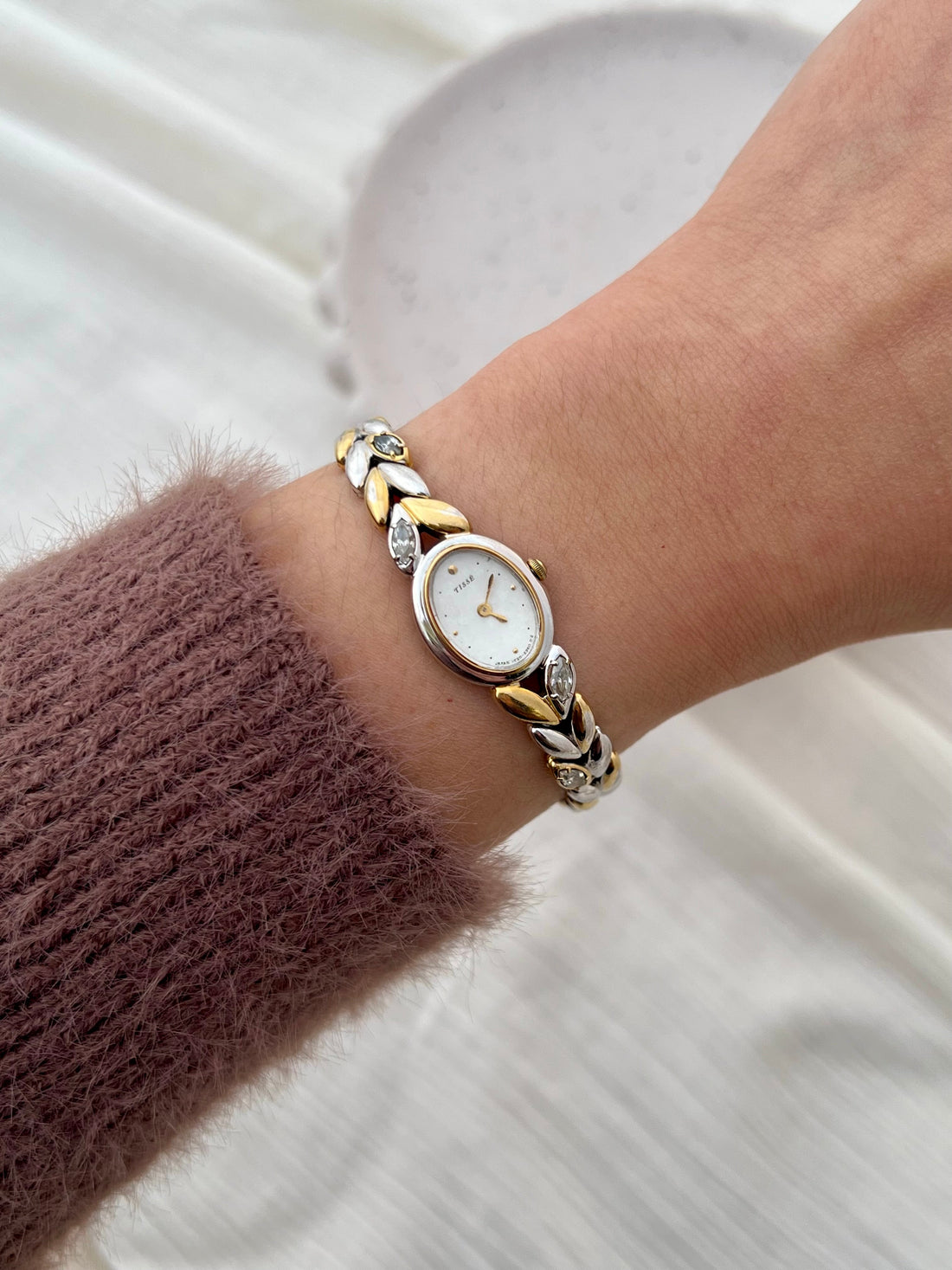
The most interesting vintage women’s watches do not simply sit beside your jewellery. They participate in it. Their bracelets catch the light like chains, their cases behave like pendants, and their dials add one precise point of detail to the wrist.
A watch designed as one complete object
On many ordinary watches, the strap is practical and replaceable: it holds the case in place and stays visually quiet. A true jewellery watch works differently. The transition from bracelet to case is part of the composition. Links narrow, curve or repeat the outline of the dial. The clasp disappears. Even the crown can feel like a deliberate decorative accent.
This gives the piece a sense of continuity. Your eye does not stop at the watch head and then begin again at the bracelet. It reads one uninterrupted line around the wrist.
When the bracelet is the main event
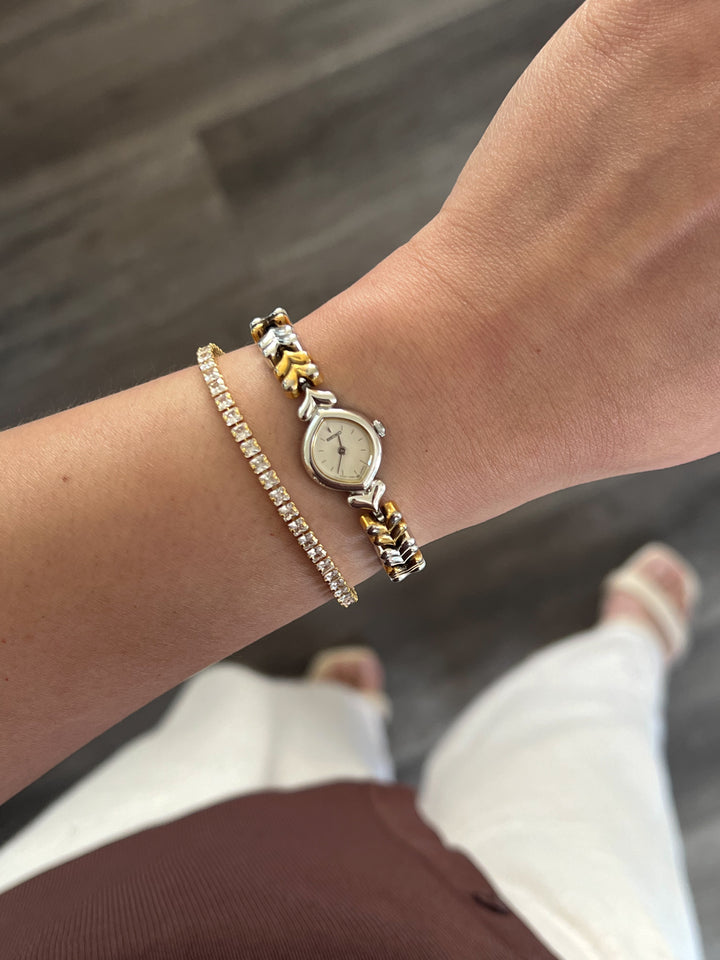
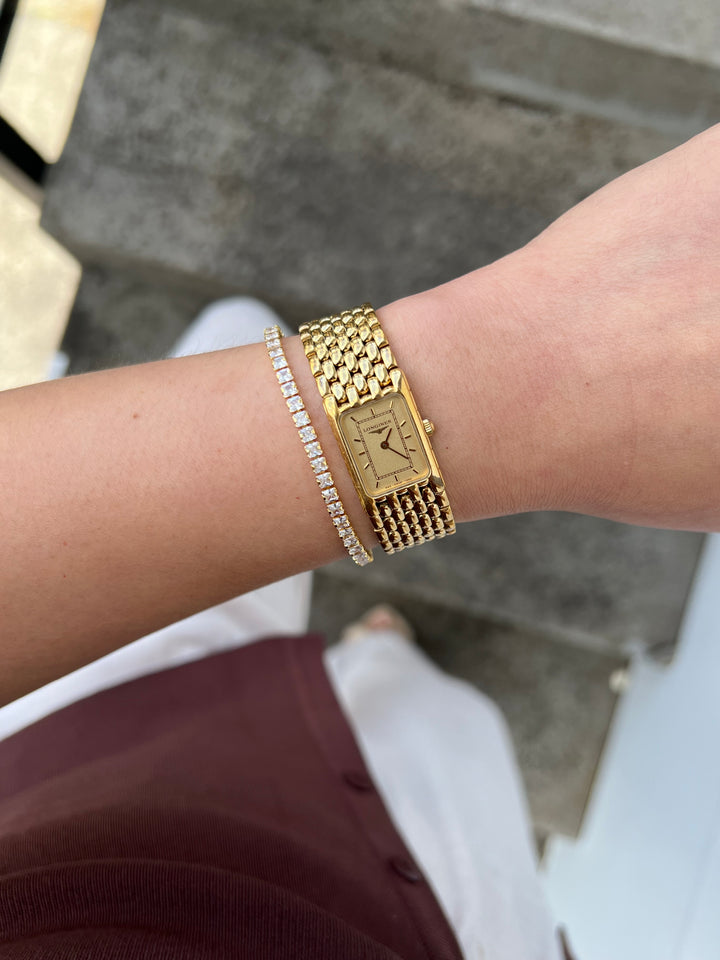
Bracelet-led watches are among the most expressive vintage designs because the maker has more surface to work with. Instead of a plain row of links, the bracelet might resemble woven mesh, overlapping leaves, a ribbon, a chain or a sequence of polished geometric shapes.
Repeated leaf, petal or geometric forms create pattern and change as the wrist moves.
A fine woven surface reflects light softly and lets the case emerge from the bracelet.
End links echo the case so closely that the boundary between watch and bracelet almost disappears.
The vintage Seiko women’s collection is a particularly rich place to see how bracelet shape and case design can be treated as a single idea.
Case shape becomes ornament
A round dial is only one possibility. Vintage women’s watches make use of elongated ovals, softened rectangles, tonneau cases, hexagons and asymmetric forms. These shapes alter the character of the piece before colour or branding enters the conversation.
A narrow rectangle can resemble a tiny framed artwork. An oval feels softer and more fluid. A sharply cut case brings a little architecture to an otherwise delicate bracelet. This is where a watch becomes personal: two pieces can be equally refined and express completely different temperaments.
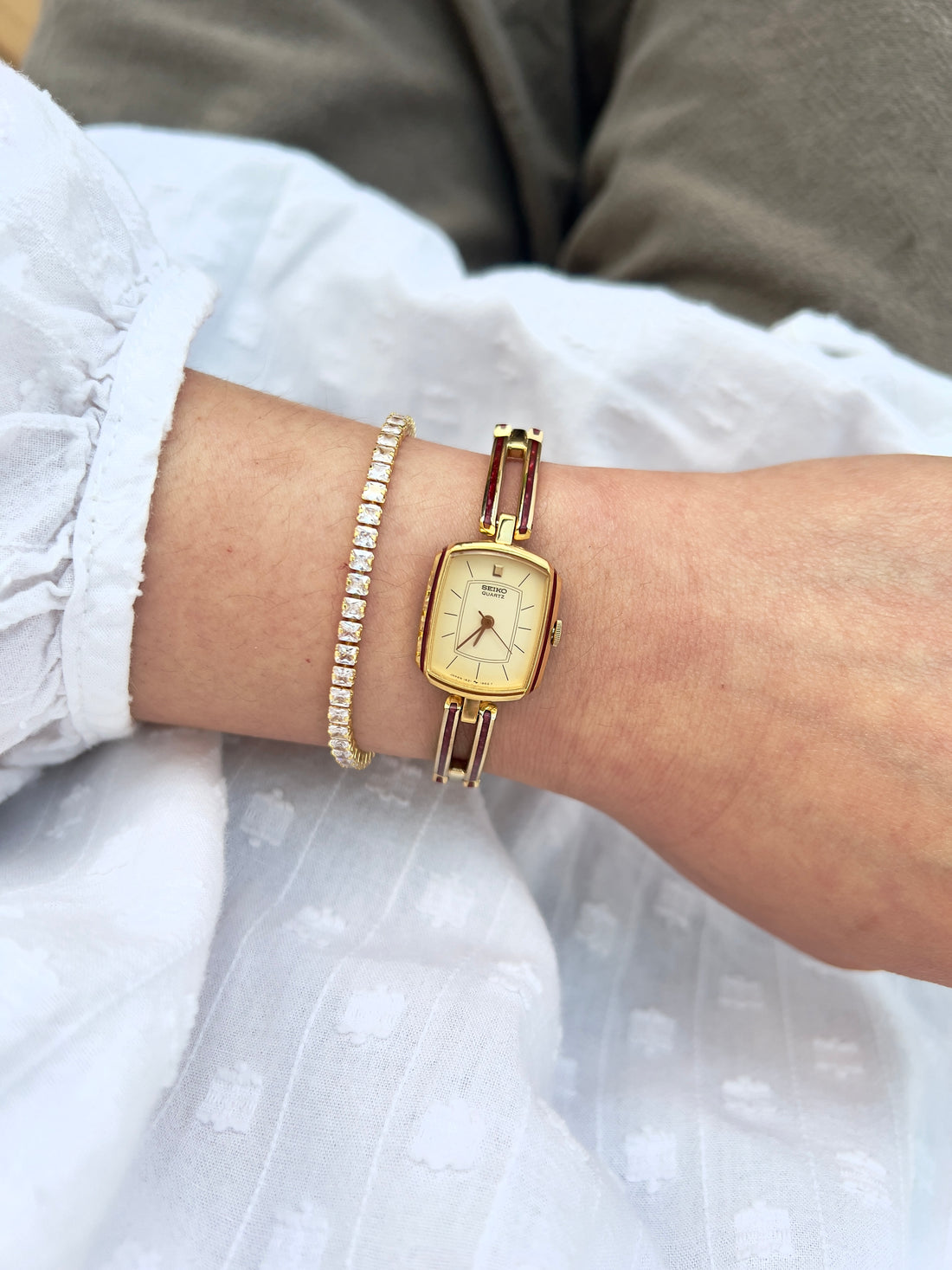
A jewellery watch should be interesting before you read the name on the dial.
The smallest details create the strongest character
Jewellery watches reward close looking. Their appeal often lives in details that photographs can flatten: the way a faceted crystal changes the dial at an angle, a brushed surface beside a polished edge, a champagne finish that warms in evening light, or a clasp hidden so carefully that the bracelet appears continuous.
- The crystal. Faceting, curvature and reflections can give a simple dial unexpected depth.
- The dial finish. Linen, sunburst, mother-of-pearl and fine texture add interest without clutter.
- The case edge. Soft curves feel fluid; crisp corners make the watch feel architectural.
- The bracelet rhythm. Repeated links create a pattern that changes with every movement.
- The clasp. A concealed or integrated clasp preserves the illusion of an uninterrupted jewel.
- The signs of age. Gentle patina can add warmth, but condition should always be shown and described honestly.
For another expression of fine casework and elegant bracelets, explore our Longines women’s watches.
How to wear a vintage jewellery watch
Begin by treating the watch as jewellery, not as a device that must match every other element exactly. Choose what you want it to contribute: a line of gold, a flash of crystal, a sculptural shape or a point of contrast.
Let the watch stand alone
An unusual bracelet or case already provides enough pattern to carry the wrist by itself.
Repeat one visual note
Echo a metal, stone or shape in one nearby piece rather than matching the entire stack.
Mix polish with texture
Pair a smooth bangle with woven mesh, or a fine tennis bracelet with broader gold links.
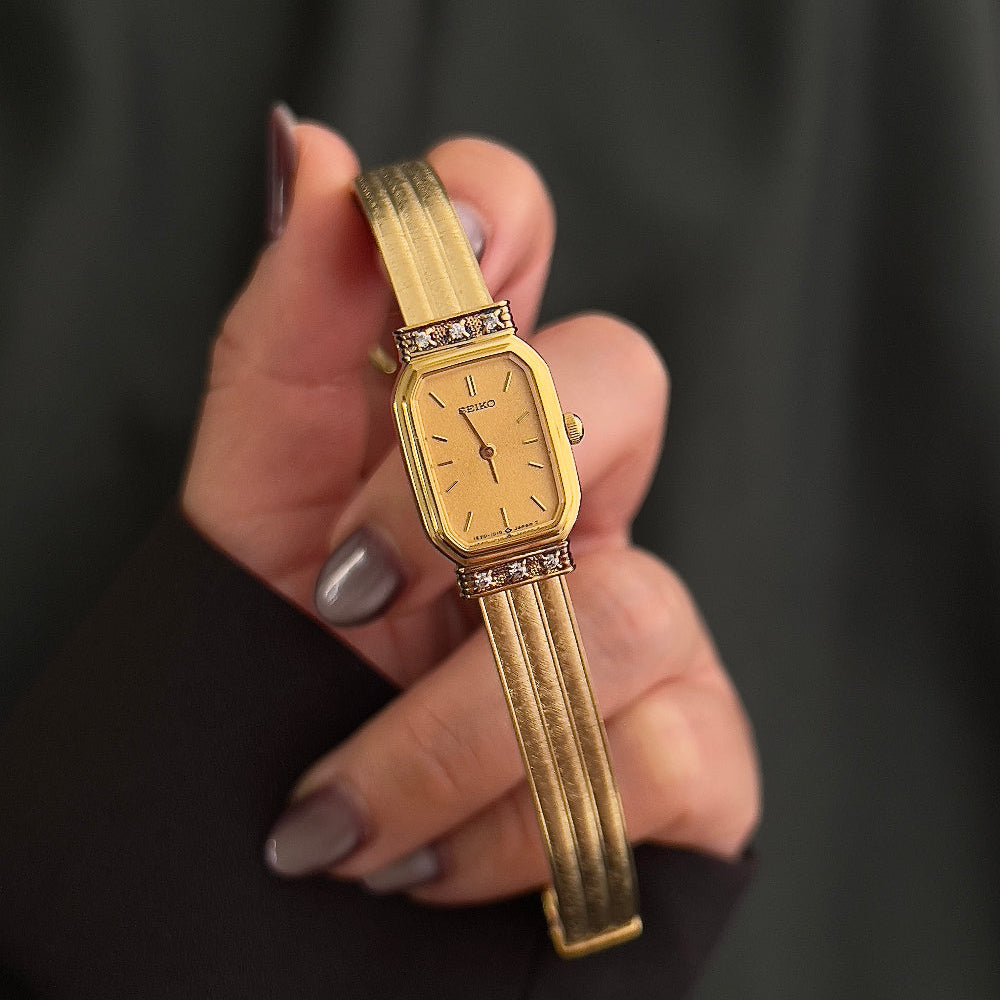
For watches with this kind of evening presence, explore the sculptural cases and decorative details in our Cocktail Classics collection.
Choose the piece, then confirm the practical details
Design should be the reason you stop. Condition and wearability should be the reasons you feel confident proceeding. Look for clear photographs of the dial, crystal, case, bracelet and clasp; confirm the wearable bracelet length; and read how the movement has been tested.
Because plating, articulated links and decorative crystals can be difficult to restore invisibly, honest condition photography matters. Once the watch arrives, gentle handling will preserve the details that made it special. Our vintage watch care guide covers moisture, cleaning, storage and movement care.
Frequently asked questions
What is a jewellery watch?
A jewellery watch is designed as a complete decorative piece rather than a watch head attached to a purely practical strap. Its case, bracelet, dial and clasp share a visual language, often using sculptural links, decorative finishes or unusual shapes.
Is a jewellery watch the same as a cocktail watch?
They overlap, but they are not identical. A cocktail watch usually has a more glamorous or evening-led character. A jewellery watch can be restrained enough for everyday wear while still being designed as an ornamental whole.
Can a vintage jewellery watch be worn every day?
Yes, provided its condition and movement suit regular use. Delicate plating, crystals and vintage water seals still require thoughtful handling, so avoid moisture, impact, perfume and lotion.
Do my watch and jewellery metals need to match?
No. Mixed metals can look intentional when one element connects the colours—for example, a two-tone watch, a bracelet with both warm and cool details, or a repeated shape that makes the combination feel coherent.
What should I inspect before buying one?
Check the dial, crystal, plating, bracelet links and clasp closely. Confirm wearable length and movement type, and look for clear condition notes. Decorative parts can be difficult to replace, so accurate photographs are especially important.